A First Casino Visit for the Curious Observer: What to Notice
A first casino visit can be read without wagering: notice signs, table layouts, sound and movement to understand how the room guides attention.
A first casino visit is easier to read when you treat it as a designed public space, not a puzzle you have to solve. Signs, table layouts, sound and movement all give clues about how the room organises attention, even if you never place a bet.
Take a slow walk, pause where you can see without blocking anyone, and notice what draws your eye first. The aim is observation, not decoding a hidden system. Here is a low-pressure checklist for looking closely while leaving wagering and spending out of the picture.
What should you notice on your first casino visit?
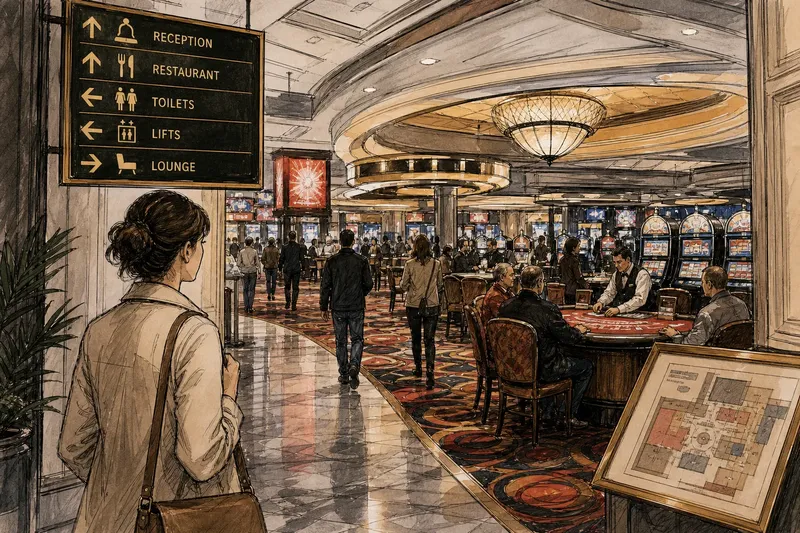
Start with the route from the entrance to the main gaming floor. Look for signs that point towards reception, toilets, lifts, restaurants or quieter areas. Their wording and placement tell you how the venue separates practical directions from invitations to play.
- Signs: Notice which are overhead, which sit at eye level and which appear beside a doorway or junction. Ask whether they help you choose a route or draw your attention to a particular area.
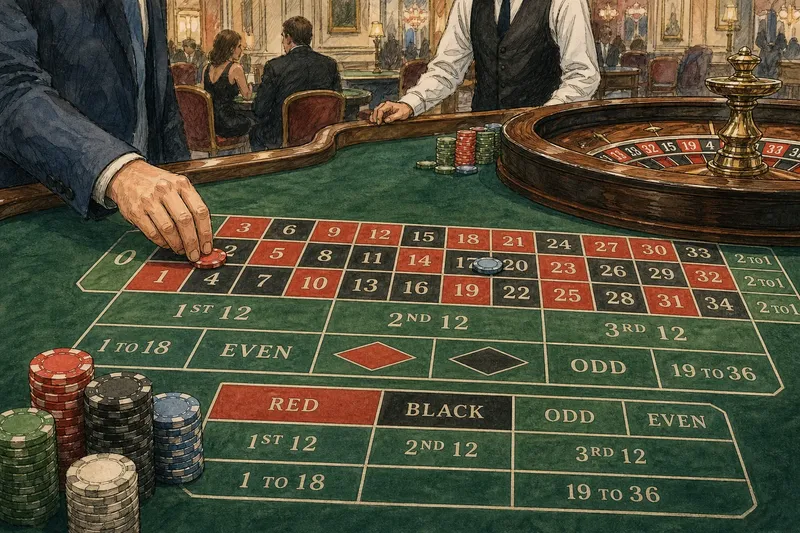
- Table layouts: Look at the shape of each table, the position of the dealer and the way chairs or standing spaces are arranged. The layout indicates where people are expected to gather and where an observer can stand without getting in the way.
- Sound: Listen for the blend of conversation, announcements, music and game sounds. Notice how that blend changes between the entrance, open floor and quieter edges.
- Movement: Watch how people pass through, pause and cluster. Keep the view general rather than studying individual players.
- Transitions: Pay attention to where carpets, lighting or ceiling height change. These shifts can mark a change of pace or purpose without a sign spelling it out.
You do not need to record every detail. Pick one feature at a time, then look for how it relates to the next: a sign may lead towards a cluster of tables, while a quieter corridor offers a different kind of pause.
How do casino signs guide people around the room?
Signs work both as directions and as part of the room’s visual language. A clear arrow can answer an immediate question, while a large display near a central path may be designed to catch the eye before you decide where to go.
Notice the difference between wayfinding signs and promotional signs. Wayfinding usually names a destination or gives a direction. Promotional material tends to foreground an event, game or offer. If both appear together, see which one is easiest to read from where people are walking.
Also look for what is not signposted at a glance. A helpful venue may use maps, directory boards or staff desks to orient visitors. Those practical features are part of the space too; noticing them can make the room feel less like a maze and more like a place with several kinds of activity.
What can table layouts tell you without playing?
A table’s shape shows how the game and its participants are arranged. A semicircular edge, for example, brings players into a shared line of sight with a dealer, while a broader open side can leave room for people to watch from behind. These are observations about design, not invitations to approach a live game.
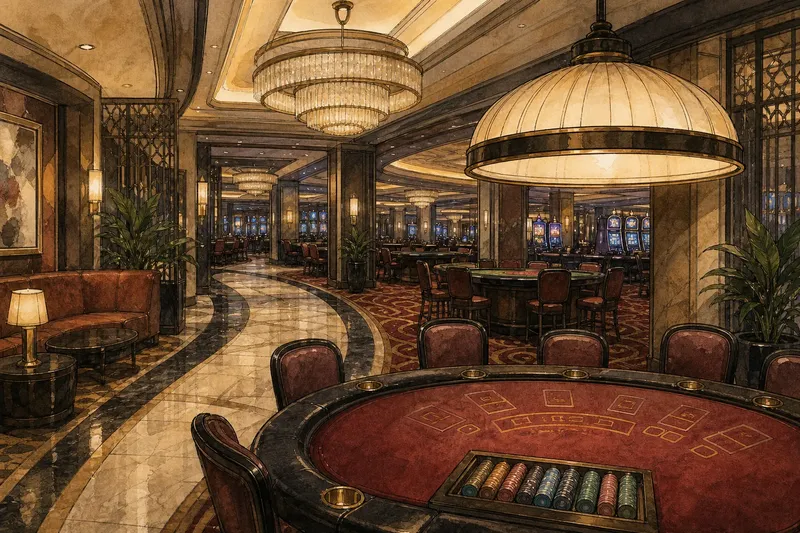
Look for repeated patterns across the floor. Tables may be grouped by game, separated by screens, or arranged to leave a central passage. Notice whether nearby seating faces the action or turns away from it. The room’s organisation can make some games feel like a stage and others more like a conversation among participants.
Respect boundaries. Do not lean over a table, handle equipment or photograph people without permission. If a staff member asks visitors to move, follow the request and choose another place to observe.
Why does casino sound change from one area to another?
Sound changes with distance, surfaces, crowd density and the activity in each area. A lively patch may carry overlapping voices and repeated game sounds; a corridor or lounge can feel calmer because it is farther from the main floor or separated by walls and furnishings.
Try listening from a few unobtrusive spots. Notice whether the sound arrives as a steady wash or as distinct bursts. Then look around for possible reasons: an open ceiling, soft seating, a doorway, or a group gathered around an event. You are not trying to identify every sound, just to connect the acoustic impression with the room’s shape and use.
It is not worth straining to hear private conversations or trying to infer what an individual is doing. General sound patterns are enough to understand how one area differs from another.
How can you observe movement without getting in the way?
Choose a place beside a wall, a broad passage or a designated seating area, rather than a doorway or the edge of a busy table. From there, watch the room’s flow in broad strokes: where people enter, which paths stay open, and where groups tend to pause.
Imagine you arrive and see a bright sign beyond a wide central walkway. You pause beside a wall, notice that most people continue towards the sign while a smaller stream turns towards a lounge, then move on when the walkway becomes busy. The useful observation is how two destinations divide the flow, not what any one visitor chooses.
Keep your gaze courteous. Avoid following someone, staring at a particular player or blocking a view. If you want to look more closely at a display, step aside first and give others room to pass.
Which questions help make a first casino visit easier to read?
Can you visit a casino without gambling?
That depends on the venue’s entry rules and the areas open to visitors, so check its visitor information before you go. Once inside, you can focus on signs, architecture, sound and general movement without taking part in a game.
Where is a polite place to stand and watch?
Choose an open public area that does not obstruct a path, staff member or table. If the boundary is unclear, ask a staff member where visitors may observe.
Should you take notes or photographs?
Brief written notes can help you remember design details, but keep them discreet and do not record people’s personal information. Photography rules differ by venue, so ask before taking pictures and respect any restrictions.
What if the room feels overwhelming?
Step away from the busiest area and find a quieter public space, such as a lounge or lobby, if available. You can also leave; there is no need to finish a circuit or stay longer than feels comfortable.
How do you leave with a clearer impression of the room?
Before you go, choose one small detail you might otherwise have missed: a sign that changes direction, a table arrangement that creates a viewing edge, or a sudden shift from lively sound to quiet. Pair it with the route or area where you noticed it. That simple link between detail and place makes the memory more useful than a list of disconnected impressions.
A first casino visit for the curious observer does not need a script. A few considerate pauses, an eye for how the room communicates and respect for other visitors are enough to reveal its design language without turning the visit into a test.